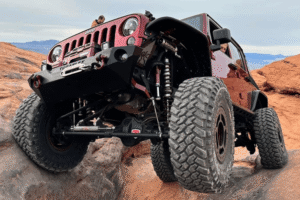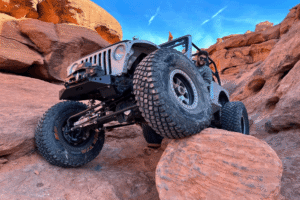

Not all lift kits are created equal. If you’re planning to tackle trails near Moab or want your rig sitting taller for overlanding adventures, you need more than a basic spacer lift. Custom lift installations in Grand Junction, CO, go beyond bolt-on kits by addressing suspension geometry, driveshaft angles, caster correction, and long-term reliability.
At Barney Brothers Off Road & Repair, our team walks drivers through every detail of what a proper custom suspension setup involves. This guide breaks down the differences between basic lifts and custom work, what to expect during the process, and how to choose the right setup for your vehicle.
What Makes a Custom Lift Different in Colorado?
You’ve probably seen bolt-on leveling kits and budget spacer lifts online. Those raise your ride height, but they don’t address the geometry changes that happen when you push beyond two or three inches of lift. Here’s where custom lift installations in Grand Junction, CO stand apart.
A basic spacer lift sits between your factory spring and mount. It’s quick and affordable, but it doesn’t improve suspension travel and can stress factory components over time.
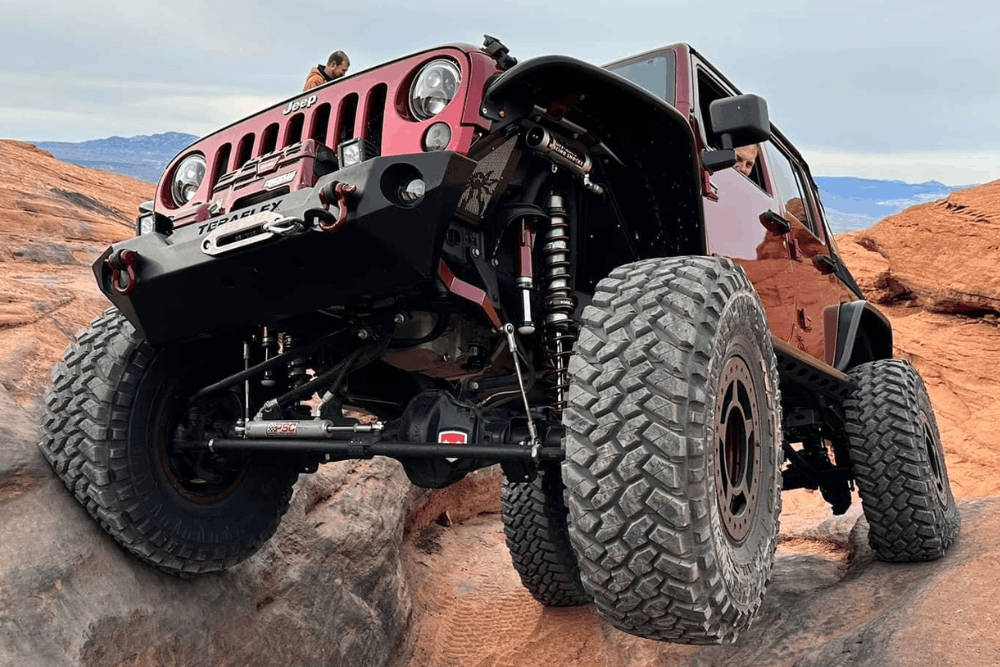
A custom lift installation replaces or reconfigures major suspension components to maintain proper geometry at the new ride height. This typically includes:
- Long arm suspension kits that reposition control arm mounting points for better articulation and smoother ride quality
- Coilover conversions that replace factory struts with adjustable coilover shocks for tunable ride height and damping
- Caster correction brackets or adjustable upper arms to restore steering alignment
- Extended or custom driveshafts to prevent vibration at steeper pinion angles
- Upgraded track bars, drag links, and tie rods to handle the added stress
Skipping these steps on a four-inch-plus lift can lead to premature wear, vibration, poor handling, and safety issues.
Understanding Suspension Geometry for Grand Junction Trails
One of the most overlooked parts of lifting a vehicle is what happens to suspension geometry once you change the ride height. This is especially critical for Wrangler, Gladiator, 4Runner, Tacoma, and Tundra owners planning to run larger tires on trails around Grand Junction.
Driveshaft Angles and Pinion Alignment
Every time you lift a vehicle, the angle between the transfer case output and the rear axle pinion changes. Go too far without correction, and you’ll get vibrations at highway speed. In a solid-axle vehicle, this is fixed with a slip yoke eliminator (SYE) and a custom driveshaft. For IFS setups found on Tacomas and 4Runners, the approach involves differential drop kits or CV-axle-friendly geometry adjustments.
Caster Correction and Steering Feel
Lifting the front end pushes the axle forward relative to the upper ball joint, reducing caster angle. Low caster makes steering feel wobbly and imprecise. Custom lift installations correct this with adjustable control arms, caster shims, or offset ball joints, depending on the platform.
Bump Stop and Travel Optimization
A proper custom lift also recalibrates bump stops so your suspension can cycle through its full range of travel without slamming into the frame. This matters on rough Mesa County trails where full articulation keeps all four tires planted.
Choosing the Right Lift Height and Components for Your Rig
Not every vehicle needs six inches of lift. Overlifting is one of the most common mistakes we see. The right lift height depends on your tire size goals, your vehicle’s platform, and where you plan to drive.
Matching Lift Height to Tire Size
Your lift needs to accommodate the tire size you want without rubbing at full lock or full compression:
- 2.5 to 4.0 inches of lift: fits 33- to 37-inch tires on most platforms, ideal for daily driven rigs that see weekend trail use
- 4.0 to 6.0 inches of lift: accommodates 37- to 40-inch tires, best suited for dedicated trail rigs or dual-purpose builds
- 6.0+ inches of lift: supports 40-inch and larger tires, typically reserved for purpose-built off-road vehicles
These numbers vary by vehicle. A Gladiator has different clearances than a 4Runner or Suburban. That’s why custom work matters, with each build measured and adjusted for the specific vehicle.
Long Arm vs. Short Arm Lift Kits
Short arm kits use factory control arm mounting locations with longer or adjustable replacement arms. They’re simpler and work well for moderate lifts.
Long arm suspension kits relocate the lower control arm mounts further back on the frame, creating a longer effective arm length. This results in better ride quality, more articulation, and improved approach angles. If you’re lifting four inches or more on a Wrangler or Gladiator, a long arm kit is the better investment for serious off-road use near Moab or the Kokopelli Trail system.
Coilover Conversions for Adjustability
A coilover conversion replaces your factory spring-and-shock setup with a single adjustable unit. Brands like Fox Shocks, King Shocks, and Bilstein offer coilover options that let you dial in ride height and damping. This is a popular upgrade for Tacoma, Tundra, and 4Runner owners in Grand Junction who want performance on both the highway and the trail.
Ready to talk through the right lift setup? Reach out to Barney Brothers Off Road & Repair at 2394 Hwy 6&50, Grand Junction, CO 81505, or call (970) 243-9300.
What Happens After the Lift Goes On
A custom lift installation doesn’t end when the last bolt is torqued. There are critical follow-up steps that separate a build that performs from one that causes problems.
Alignment Is Non-Negotiable
After any lift, a full alignment is essential. Our team uses the Hofmann Alignment System to set caster, camber, and toe to correct specifications for your new ride height. Skipping this step causes uneven tire wear and poor handling.
Re-Gearing for Larger Tires
If you’ve moved up to 37-inch or larger tires, your factory gear ratio probably isn’t cutting it. You’ll notice sluggish acceleration and the transmission hunting for gears. A ring and pinion re-gear restores your power band and driving feel. Our team handles re-gear work on multiple axle platforms using professional-grade components, including Yukon gear sets and other premium drivetrain parts built to handle the demands of serious off-road use.
Supporting Modifications to Consider
A well-built custom lift often pairs with upgrades that round out the vehicle’s capability:
- Personal recovery gear like tow straps, shackles, traction boards, and tools
- Lockers for improved traction on technical terrain
- Bumpers with integrated recovery points for trail safety
- Skid plates to protect the undercarriage on rocky terrain
- Proper off-road lighting for visibility on night runs
- Advanced recovery gear, including a quality winch setup
Why Choose Barney Brothers Off Road & Repair for Your Custom Lift
The Barney brothers were born and raised in Colorado and have been involved in four-wheeling their entire lives. We can take you there, and we mean that literally. We’re the only shop in Grand Junction that teaches free off-roading, winch, and recovery classes and leads trail runs so customers can put their builds to the test.
When it comes to custom lift installations in Grand Junction, CO, we do the geometry, not just the spacers. Every build is tailored to the vehicle, the owner, and the trails they plan to run.
- ASE Certified technicians and ASE Master Technician on staff
- NAPA Car Care Center
- Hofmann Alignment System for precise post-lift alignment
- Premium suspension brands: AEV, Teraflex, BDS Suspensions, Fox Shocks, King Shocks, Bilstein, ARB, Zone Off Road, and Toytec Suspensions
- 24-month/24,000-mile warranty
- Financing available through Synchrony Finance
- Free digital vehicle inspection with every service
- Shuttle service within city limits, early bird drop-off and pick-up
We treat every customer like family and educate you every step of the way. Whether you’re prepping a Gladiator for Moab, setting up a 4Runner for overlanding, or getting a Suburban ready for hunting season, we’ll build it right.
FAQs About Custom Lift Installations in Grand Junction, CO
What is the difference between a long arm and short arm lift?
A short arm lift uses factory control arm mounting points with upgraded arms, while a long arm lift relocates the mounts to create a longer arm length. Long arm kits provide better ride quality, more articulation, and improved performance on lifts of four inches or more.
Do I need new driveshafts with a 4-inch lift?
In most cases, yes. A four-inch lift significantly changes the driveshaft angle, which can cause vibrations and premature wear. A custom driveshaft, often paired with a slip yoke eliminator, corrects this and keeps your drivetrain running smoothly.
How much does a custom suspension lift cost?
The cost varies widely depending on the vehicle, lift height, and components chosen. A quality custom suspension lift with proper geometry correction typically ranges from $3,000 to $10,000 or more, including parts and labor.
What is the best lift kit brand for off-road use?
The best brand depends on your vehicle and driving style. Popular options for serious off-road use include AEV, Teraflex, BDS Suspensions, and Zone Off Road, all of which offer kits designed for proper geometry correction at higher lift heights.
Does lifting a truck void the warranty?
A lift kit alone doesn’t automatically void your entire vehicle warranty. However, a dealer may deny a specific warranty claim if they can prove the aftermarket modification directly caused the failure. Choosing a professional installation with proper components helps minimize this risk.
How long does it take to install a custom lift kit?
A basic bolt-on lift can be done in a day, but a full custom lift kit installation with long arms, coilovers, driveshaft work, and alignment typically takes two to four days. More complex builds involving re-gearing or additional modifications may take longer.
Schedule Your Custom Lift Installations in Grand Junction, CO Today
Your next adventure starts with the right foundation under your vehicle. Whether you need a long arm suspension kit, a coilover conversion, or a complete custom lift installation, the team at Barney Brothers Off Road & Repair is ready to help. Visit us at 2394 Hwy 6&50, Grand Junction, CO 81505, or call (970) 243-9300 to schedule a consultation.