
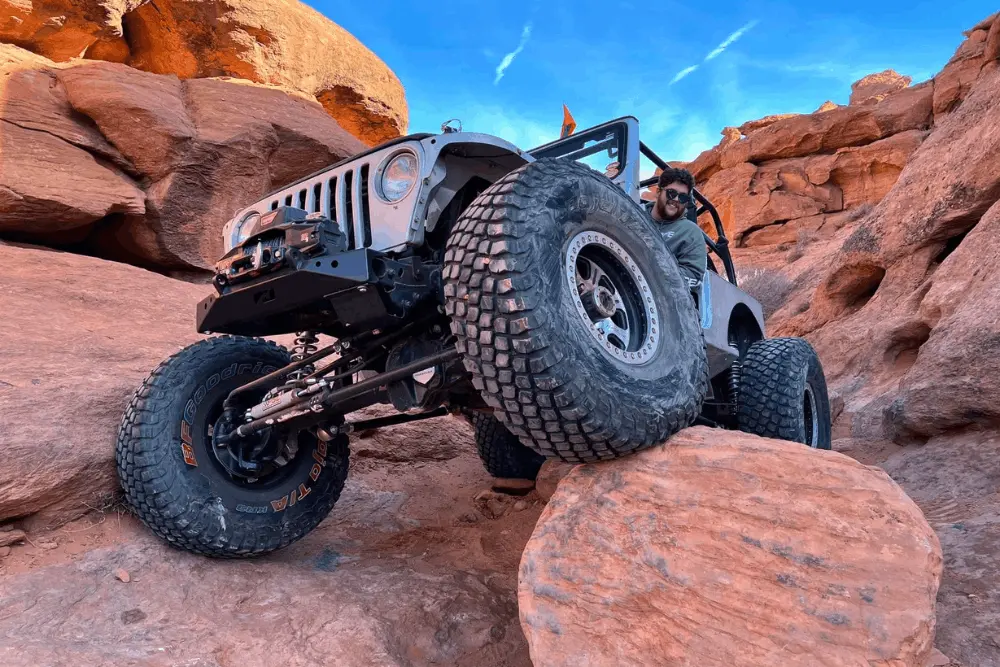
Most 4×4 owners focus on tire size. Few think about what happens to their gear ratio when those bigger tires hit the axle. Here in Grand Junction, CO, where trails climb fast and towing season runs hard, that oversight shows up quickly, and it shows up expensively. Tire size and gear ratio have to work together, and when they do not, your engine overworks, your transmission strains, and your capability on the trail drops right when you need it most.
At Barney Brothers Off Road & Repair, we help drivers get this pairing right every day. This guide walks you through the real numbers behind tire and gear matching, why Colorado elevation makes it even more critical, the warning signs your current setup is already off, and what a proper ring and pinion installation looks like from start to finish.
The Relationship Between Tire Size and Gear Ratio
Your factory gear ratio was engineered around a specific tire diameter. When you go up in tire size, you’re asking your drivetrain to work harder with the same mechanical advantage, and that mismatch shows up fast.
Think of it this way: pedaling a bicycle in too high a gear uphill takes significantly more effort. Your engine and drivetrain feel the same strain when your tires outgrow your gearing.
Here is what changes when tire size increases without a gear ratio adjustment:
- Torque loss: Reduced pulling power at low speeds and on steep grades
- Acceleration lag: The vehicle feels sluggish off the line and at highway merge speeds
- RPM creep: Engine revs higher just to maintain normal cruising speed
- Transmission strain: Automatic transmissions hunt for gears and run hotter than designed
- Drivetrain wear: Added stress on ring and pinion gears, axle shafts, and U-joints
Left unaddressed, this cumulative stress can significantly shorten the life of your axles and differentials.
How Do You Find the Right Gear Ratio for Your Build?
Finding the right gear ratio starts with knowing your current setup and where you want to take your vehicle. The relationship between your tire size, axle gearing, and engine output all play a role, and getting it wrong can mean sluggish performance on the trail or unnecessary wear on your drivetrain.
At Barney Brothers Off Road & Repair, we take the guesswork out of the equation. Our team evaluates your specific vehicle, tire size, and how you use it to recommend the gear ratio that makes the most sense for your build. Whether you’re running 35s on a Jeep Wrangler for weekend trail runs or stacking 40s on a Toyota Tacoma for serious overlanding, the right ratio makes a noticeable difference in how your rig performs.
Not sure where to start? Check out the Barney Brothers Off Road & Repair’s gear ratio calculator for a quick reference, then give us a call and we’ll help you dial it in from there.
Why Colorado Elevation Changes Everything
This is the part most online guides skip over, and it is genuinely important for anyone wheeling or driving in Western Colorado.
Grand Junction, CO, sits at approximately 4,600 feet above sea level. Many trails, forest roads, and hunting areas in Mesa County climb well above that. At elevation, your engine produces less power due to thinner air. When you layer a mismatched gear ratio on top of that, the effect compounds quickly.
What High-Altitude Driving on Grand Junction Trails Does to a Mismatched Setup
- Engine bogging on sustained climbs with little recovery
- Transmission overheating while towing on long ascents and descents
- Loss of throttle response on switchbacks and technical terrain
- Increased fuel consumption with reduced capability to show for it
For drivers heading to Kokopelli Trails, Rabbit Valley, or the Book Cliffs, and for those pulling through back roads during elk and deer season, a properly matched gear ratio is a reliability and safety upgrade for the terrain you actually drive.
The Hidden Consequences Nobody Talks About
Changing your tire size triggers a chain reaction across several vehicle systems that also need attention. Skipping these steps is where builds get into trouble.
Systems That Need Recalibration After a Tire Size Change
- Speedometer accuracy: A larger tire covers more ground per revolution, throwing off your speed reading immediately
- Odometer tracking: Inaccurate mileage affects oil change intervals, service scheduling, and warranty tracking
- ABS and traction control: These systems use wheel speed sensors calibrated for your stock tire diameter
- Transmission shift points: Automatic transmissions need the correct tire size data to shift properly under load
A proper re-gear addresses the ratio itself, but the calibration work that follows is what makes the entire system function accurately.
Ring and Pinion Installation: What a Professional Setup Involves
Re-gearing is not a bolt-on modification. It requires precision, the right tooling, and hands-on experience with the axle platforms your rig runs. At Barney Brothers Off Road & Repair in Grand Junction, CO, our ASE-certified technicians handle ring and pinion installation across multiple axle configurations common on Jeeps and Toyota Tacomas and 4Runners.
What a Proper Ring and Pinion Installation Includes
- Axle disassembly and inspection: Bearings, crush sleeves, and pinion seals checked before any new gear goes in
- Gear pattern verification: Marking compound confirms correct tooth contact on the ring and pinion
- Backlash measurement: Set to manufacturer specifications, not approximated
- Torque and preload setup: Pinion nut and carrier bearings dialed in precisely
- Post-install road test: Nothing leaves without a final inspection and drive verification
After installation, our team uses the Hofmann Alignment System to confirm your vehicle tracks straight and true with its new gearing and tire combination. All qualifying service work is backed by a 24-month/24,000-mile warranty.
Ready to get your build dialed in? Call Barney Brothers Off Road & Repair at (970) 243-9300 or stop by at 2394 Hwy 6&50, Grand Junction, CO, 81505. Our team will walk you through the right setup for your tires, your trails, and your towing needs.
Warning Signs Your Gear Ratio Does Not Match Your Tires
Not sure if your current setup is already working against you? Here are the warning signs to watch for.
- RPMs sit noticeably higher at highway speeds than before the tire upgrade
- The truck or Jeep feels like it is constantly working hard, even on flat roads
- Towing feels significantly harder than it did before the tire change
- Transmission shifts more frequently or hesitates under load
- Fuel economy has dropped more than expected after the upgrade
If two or more of these sound familiar, your drivetrain is telling you something worth listening to.
Get Your Ring and Pinion Installation Done Right in Grand Junction, CO
Barney Brothers Off Road & Repair has been setting up Jeeps, Toyotas, Fords, Chevys, Dodges, and Subarus for over two decades. We serve drivers across Grand Junction, Fruita, Palisade, Clifton, Redlands, Montrose, Delta, and surrounding Mesa County communities.
Why Grand Junction drivers bring their rigs to us:
- ASE-certified technicians with real trail and build experience
- Certified NAPA Car Care Center
- 24-month/24,000-mile warranty on qualifying services
- Premium brands including BDS Suspension, Fox Shocks, Teraflex, ARB, AEV, and Gen-Rite
- Free digital inspection with any service visit
- The only shop in Grand Junction that leads trail runs and teaches off-road recovery and winch classes
Bigger tires open up a new level of capability. The right gear ratio makes sure your drivetrain can actually deliver it.
FAQs About Tire Size and Gear Ratios for Jeep and 4x4 Owners in Grand Junction
Do I need to re-gear when I install 35-inch tires in Grand Junction?
In most cases, yes. Running 35-inch tires without adjusting your gear ratio leads to reduced torque, sluggish acceleration, and added drivetrain stress. A 4.56 gear ratio is the most commonly recommended starting point for 35-inch tires on Jeeps and 4x4s.
What happens if I increase tire size without changing gear ratios?
Your vehicle will feel underpowered, your transmission will work harder, and your fuel economy will drop. Over time, the added stress accelerates wear on your ring and pinion gears, axle shafts, and bearings.
What gear ratio is best for 33, 35, or 37-inch tires in Colorado?
We recommend near-factory ratios of 4.27 gears with 33-inch tires, 4.56 with 35s, and 4.88 with 37-inch tires. High-elevation driving in Colorado often pushes the recommendation toward the more aggressive end of that range.
Will bigger tires hurt towing or fuel economy?
Yes. Larger tires increase rotating mass and reduce mechanical advantage, which strains your drivetrain during towing and raises fuel consumption. Re-gearing to match your tire size restores much of that lost efficiency and towing capability.
Where can I get ring and pinion installation in Mesa County?
Barney Brothers Off Road & Repair in Grand Junction, CO, offers professional ring and pinion installation with ASE-certified technicians and a 24-month/24,000-mile warranty, serving Grand Junction, Fruita, Palisade, Montrose, and surrounding Mesa County communities.
How long does a ring and pinion installation typically take?
A professional ring and pinion installation generally takes one to two days, depending on axle configuration and whether additional repairs are needed. Proper setup, including gear pattern verification and backlash measurement, takes time that directly protects your drivetrain long-term.
Schedule Your Ring and Pinion Service at Barney Brothers Off Road & Repair in Grand Junction, CO
Do not let a mismatched gear ratio hold your build back. Visit Barney Brothers Off Road & Repair at 2394 Hwy 6&50, Grand Junction, CO, 81505, or call (970) 243-9300 to schedule your consultation. We serve Grand Junction, Fruita, Palisade, Clifton, Redlands, Montrose, Delta, and all of Western Colorado.
We can take you there.